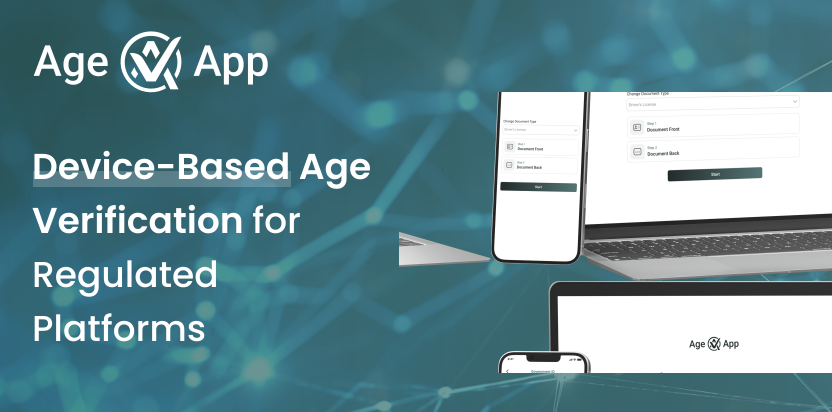
Device-Based Age Verification for Regulated Platforms

Device-based age verification systems confirm whether a user meets a required age threshold through a  secure verification flow initiated on the user’s device. When access to age-restricted content or services is requested, a verification session is triggered within the web or mobile environment.

The user validates a government-issued ID and completes a biometric liveness check to confirm they are a real, present person. The system generates a cryptographically signed, session-based eligibility result and returns it to the requesting platform.

The platform receives only an age eligibility outcome. It does not receive names, birthdates, ID images, or biometric data.

According to Business Research Insights, the global age verification software market size is projected to reach $2.5 billion in 2026 and $6.32 billion by 2035 at a CAGR of 12.35%, driven by expanding regulatory requirements and increasing demand for privacy-preserving compliance solutions.
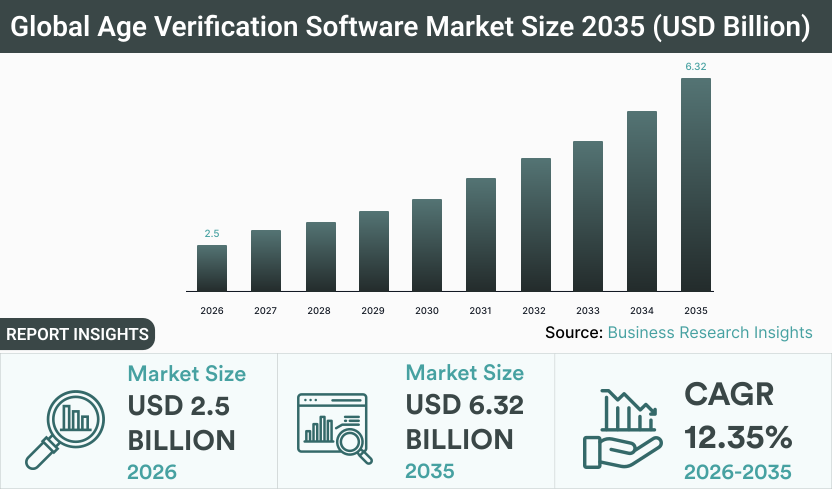
Global Age Verification Software Market Size 2035 (USD Billion)

Understanding How Device-Based Age Verification Works

Age verification through personal devices allows users to confirm eligibility in a secure and privacy-focused way. The process combines government-issued ID validation, biometric liveness checks, and cryptographic confirmation to support regulatory compliance.

Device-Based Age Verification

  • Age verification is initiated when the user attempts to access age-restricted content or services.
  • The platform triggers a verification session within the application or browser environment.
  • The device uses verification credentials created during setup to initiate a new verification session for that access request.

Biometric Liveness Check for Real User Verification

  • Biometric facial liveness confirms that a real, present user is completing the verification.
  • This helps reduce the risk of stolen accounts or proxy verification attempts.
  • Biometric data is used for liveness and matching, not to determine age.

Cryptographically Signed Age Token for Secure Verification

  • Age App generates a cryptographically signed eligibility response for the active session.
  • Platforms receive a yes or no eligibility result.
  • No personal data, images of their IDs or biometric data will be shared with the requesting platform.
Start verification with age app

User-Controlled Privacy and Reusable Age Credentials

  • Users control their verification credentials, which are stored in the user’s secure wallet instead of corporate databases.
  • Users complete the initial setup once. Each time age verification is required, a new session-based eligibility confirmation is generated.
  • Users do not need to re-upload identification documents for every access request.
  • This approach limits unnecessary data exposure while supporting regulatory compliance.

Why Device-Based Age Verification Is Necessary for Online Platforms

Self-declared age checks create significant compliance gaps. In these cases, users simply click a checkbox or enter a birthdate without any validation.

This approach provides minimal protection against underage access and may not meet evolving regulatory expectations.

Research shows that 30% of consumers abandon purchases when presented with complicated verification steps, highlighting the need for solutions that balance enforcement with usability.

Risks and Limitations of Manual Age Verification

  • Manual, operator-reviewed verification introduces privacy risks and processing delays.
  • Full identification documents are presented to human reviewers, which increases the chance of data access and exposure.
  • Processing times can range from minutes to hours, affecting user experience and creating friction in customer journeys.
  • often require platforms to collect and store sensitive personal information, increasing operational burden, liability and breach risk.

How Device-Based Verification Solves Privacy and Delay Issues

These limitations can be addressed through session-based online age verification initiated on the user’s device. Verification typically occurs in seconds without human review and with limited data exposure. 

Platforms do not need to store ID documents while remaining aligned with regulatory requirements.

The system verifies whether a user meets the required age threshold without collecting unnecessary personal information.

Advantages of Device-Based Age Verification
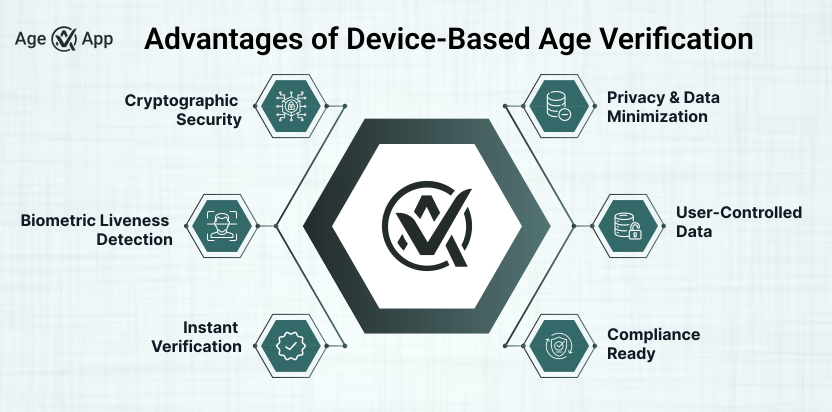
Advantages of Device-Based Age Verification

  • Device-based verification can provide stronger security through cryptographic protections designed to reduce forgery or manipulation attempts.
  • Fraud prevention is enhanced through biometric liveness detection, helping reduce spoofing attempts using photos or videos.
  • Verification is typically completed within seconds, which can reduce abandonment compared to slower manual processes. verification methods.
  • Compliance preparation is in-built since platforms are granted with an eligibility result without processing personal information.
  • One of the primary advantages is data minimization through prioritizing privacy. The initial setup is completed once, and each access request generates a new verification session without requiring repeated ID uploads.
  • Personal data remains in users wallets that are fully controlled by users rather than being distributed across platform databases.

Challenges of Device-Based Age Verification

  • Some users may have outdated devices or limited internet access, which can interfere with the verification performance.
  • Not all devices support advanced biometric capabilities or secure verification features.
  • Different hardware and software environments may result in variations in performance.
  • Some users may not have compatible devices or may face technical barriers during initial setup.
  • Security, privacy and user experience must be carefully balanced.
  • Systems must be robust enough to discourage fraud while remaining accessible to legitimate users.
  • Privacy protections should not introduce unnecessary friction.
  • Businesses should aim to implement age verification systems that function consistently across web, mobile, and in-person environments without requiring entirely separate workflows.

Key Industry Trends In Device-Based Age Verification Systems:

  • Adoption is increasing across e-commerce platforms selling age-restricted products such as alcohol and tobacco.
  • Digital content providers implement verification to comply with evolving state and federal regulations.
  • Gaming platforms employ a device-based approach to reduce underage gambling and inappropriate content access.
  • Social media companies face growing regulatory pressure to verify user ages as new  laws are enacted in multiple states.

“Privacy is not about hiding something, it’s about protecting something that belongs to you.” — Edward Snowden

Privacy and Technology Advances

Privacy-preserving approaches to verification are gaining  adoption as users and regulators demand stronger data protection standards. Zero-knowledge proof systems can confirm age eligibility without revealing birthdates or full identity details.

Age App applies cryptographic techniques to validate whether a user meets a required age threshold without exposing personal data to the platform.

These methods support regulatory compliance while aligning with data minimization principles.

System Limitations

Common limitations include fragmentation across platforms and lack of standardization. Users are usually  required to complete verification separately for different services or industry segments.

Integration complexity varies depending on the verification provider and platform architecture.. Some solutions are optimized for web environments and may not extend easily to mobile or in-person verification scenarios.

In 2025 alone, nine states enacted age verification laws, bringing the total number of states requiring age verification for access to adult content to 25.
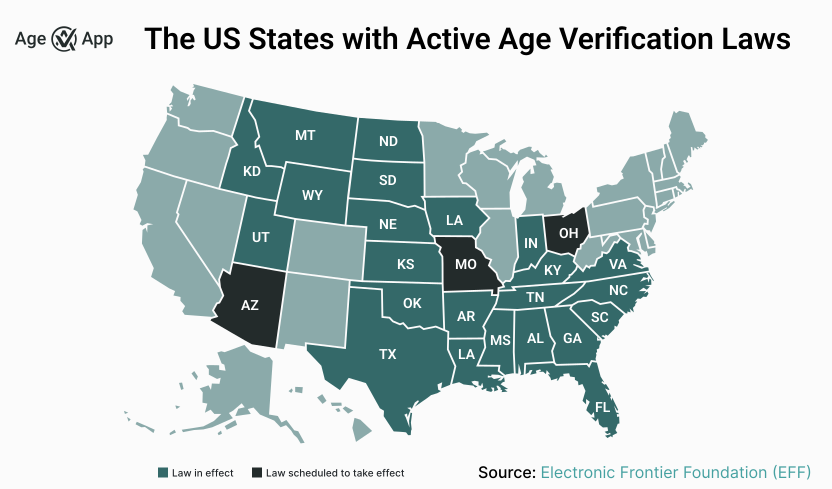
The US States with Active Age Verification Laws

This regulatory expansion is accelerating adoption of scalable verification systems that can operate across jurisdictions.

Emerging Developments in Device-Based Age Verification

Recent developments focus on privacy-preserving verification methods that confirm age eligibility without disclosing unnecessary personal information.

Zero-knowledge approaches allow platforms to verify that a user meets an age threshold without accessing birthdates, addresses, or identification numbers. Age App applies this model to keep verification session-based and privacy-focused by design.

Multiple platforms can trigger verification, with each access creating its own cryptographically signed eligibility result. After completing initial setup, users do not need to resubmit identification documents. Each request generates a fresh eligibility confirmation tied to that session.

These approaches are increasingly relevant in sectors that must meet high compliance standards while respecting privacy regulations, including GDPR and COPPA.

How to Implement Device-Based Age Verification in Your Business

Pre-Integration Assessment

Key considerations before integration include:

  • Evaluate your technical capacity and compliance requirements
  • Determine the appropriate age thresholds for  your business(18+, 21+) or any other requirements.
  • Identify verification touchpoints that minimize unnecessary friction.

[age_app_blog_cta button_target=”1″ heading=”Integrating Across Web, Mobile, or In-Person?” description=”Age App Deploy age verification using SDKs and QR-based flows designed for regulated environments.” button_text=”Get Integration Support” button_url=”https://share.hsforms.com/1bw6ZG-WkSXqaMcuFbqtK5Qrm1t3″]

Platform-Specific Workflows

Implementation depends on your environment:

  • Web platforms can integrate using a JavaScript SDK
  • Mobile applications can integrate through native iOS and Android SDKs.
  • QR-based flows can support age verification in physical locations

Privacy and Security Requirements

  • Select providers that use encryption and privacy-focused security measures
  • Ensure the platform does not store raw ID images or unnecessary personal data.
  • Test verification flows across devices and connection conditions.
  • Clearly communicate the purpose of verification and privacy.

Regulatory Alignment

  • Understand the laws applicable in your operating jurisdictions.
  • Implement flexible verification methods that can adapt to evolving requirements.
  • Maintain records  of verification outcomes where required for compliance purposes.

Regulatory Compliance for Device-Based Age Verification

Key regulations:

  • COPPA: Limits collection of personal data from children under 13 without verifiable parental consent.
  • GDPR: Requires strong data protection standards for personal data of EU residents.
  • State age laws: Require reasonable age checks before granting access to restricted content.

Cryptographic Token Compliance

  • Provide cryptographic proof of age eligibility without storing unnecessary personally identifiable information (PII).
  • Limit platform-side data collection to an eligibility result.
  • Avoid transmitting names, birthdates, or identification numbers to the platform.

Conclusion

Device-based age verification validates a government-issued ID and performs a biometric liveness check before granting access, helping reduce underage or fraudulent use. 

Cryptographic protections limit the  personal data shared with platforms. Platforms receive pass or fail eligibility results without accessing names, birthdates, or identification documents.

This approach supports regulated industries such as cannabis dispensaries, gaming & streaming, and venues or events. Organizations can meet regulatory requirements while maintaining a smooth verification experience designed to reduce unnecessary friction. As age verification laws expand and privacy expectations increase, session-based, cryptographic eligibility verification is becoming a core component of modern age verification strategies.
Understanding Privacy First Age Verification for Users and Platforms

What Privacy-First Age Verification Means

Privacy-first age verification is the process of confirming whether a user meets age requirements to access age-restricted services without requiring platforms to collect or store full identity artifacts.

While identity verification confirms who a user is, age verification determines whether they meet a defined age threshold. Identity verification typically involves broader data collection, which increases privacy exposure compared to privacy-first age eligibility checks.

In many age-restricted contexts, platforms do not need to know a user’s exact date of birth or full identity details; only whether the user meets the platform’s required age threshold. Privacy-first age verification is designed to deliver that limited confirmation.

Age Verification vs Identity Verification: Key Differences

Age verification and identity verification serve different purposes for online platforms. Understanding the distinction helps ensure appropriate implementation and responsible data handling.

Aspect Age Verification Identity Verification
Purpose Determine whether a user meets a platform’s age requirements and thresholds. Confirm that a user is the person they claim to be.
Legal Use Required for regulated, age-gated websites, content, and services. Used for KYC, onboarding, and regulatory compliance.
Data Collected May involve validating age through documents, databases, or biometric checks, depending on the implementation model. Name, date of birth, ID details, and additional profile data used for ongoing verification and account management.
Privacy Risk Data exposure varies by implementation; Age App’s  privacy-first model is designed to limit platform-side data collection. Requires  broader identity data collection, which platforms must manage securely under applicable regulations.

In short, age verification determines whether a user meets an age requirement, while identity verification confirms who a user is. In privacy-first  online age verification models like Age App,which specifically focuses on age eligibility and provides platforms with a session-based, cryptographically signed pass or fail result for each verification session, rather than full identity artifacts.

Why Does Traditional Age Verification Increase Privacy Risk

Traditional age verification methods may require platforms to collect and process more personal data than strictly  necessary to confirm age eligibility. This increases privacy risk, security exposure, expands data management responsibilities, and introduces additional compliance challenges and complexities.

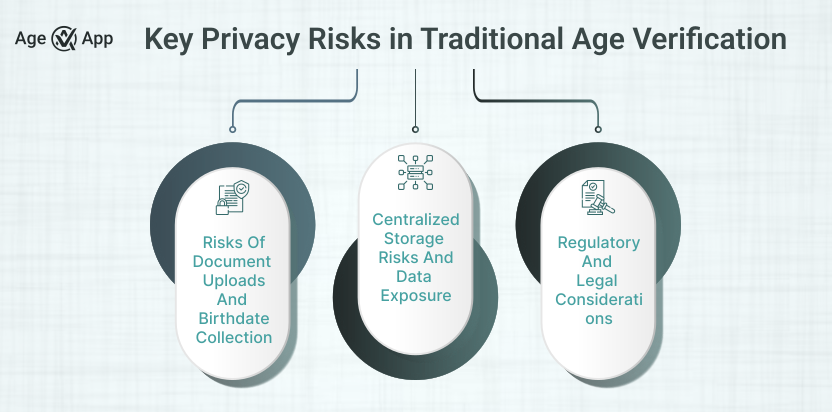
Key Privacy Risks in Traditional Age Verification

Key Privacy Risks in Traditional Age Verification

  • Risks of Document Uploads and Birthdate Collection

Some traditional methods require users to upload government-issued identification documents or provide full dates of birth. Handling this level of sensitive information increases operational overhead and requires stronger data protection controls. The more identity data a platform collects, the more it must secure, monitor, and retain responsibly.

  • Centralized Storage Risks and Data Exposure

When uploaded documents or identity information are stored in centralized systems, platforms assume greater responsibility for securing that data. Misconfigurations, unauthorized access, or delayed breach detection can increase the impact of an incident.

“Privacy is not about hiding something, it’s about protecting something that belongs to you.” — Edward Snowden

Industry research illustrates the financial consequences of data breaches. According to analysis summarized by Varonis, breaches that take longer than 200 days to identify and contain can cost over $5 Million on average.

While breach outcomes vary, storing larger volumes of sensitive identity data can increase exposure and response complexity.

  • Regulatory and Legal Considerations

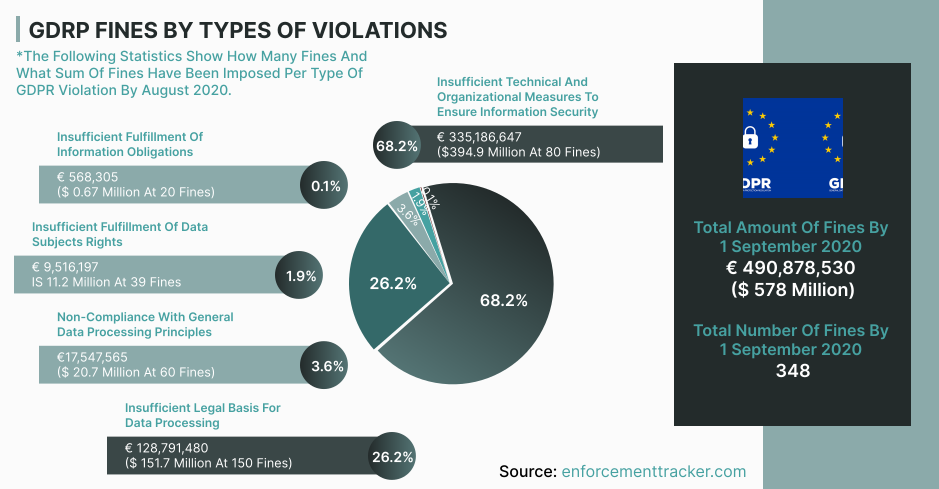
    Privacy regulations such as GDPR and CCPA define how personal data can be collected, processed, and retained. Public reporting shows that cumulative GDPR reached  fines up to €5.88 Billion  for businesses across the globe,reflecting ongoing enforcement of data protection requirements.

    Broader identity data collection may increase compliance obligations and regulatory scrutiny if not implemented carefully. For platforms operating in age-restricted environments, minimizing unnecessary identity data collection can help reduce operational risk and simplify compliance management.

GDRP FINES BY TYPES OF VIOLATIONS

Why Data Minimization Matters in Age Verification

When implementing new age verification systems, you should follow data minimization as the core principle of your process. The principle guides organizations to collect only the minimum eligible data that is necessary to complete the verification process.           

By minimizing the data you collect, you reduce exposure to sensitive data and help build user confidence by respecting privacy.     

Data minimization is a core principle of modern privacy frameworks. In the context of age verification, it means collecting only the information necessary to confirm whether a user meets a required age threshold and no more. 

By limiting the amount of identity data collected and stored, platforms can reduce unnecessary data exposure and simplify data management responsibilities. This approach supports privacy-by-design principles while helping platforms focus on confirming eligibility rather than managing broader identity records.

  • How “only verifying age” reduces risk

When a system is designed to confirm age eligibility without storing full identity artifacts at the platform level, it reduces the volume of sensitive data retained within the platform’s infrastructure. This can help limit operational complexity and narrow the scope of data that must be secured and governed.

Data minimization is also reflected in regulations such as  GDPR,and CCPA, where it is explicitly mentioned that collected data should be adequately relevant,and limited to what is necessary  for a defined purpose. In age-restricted services, that purpose is confirming eligibility, not establishing full identity profiles. 

Launch Age App Demo

How Does Privacy-First Age Verification Work?

Age App’s privacy-first age verification confirms whether a user meets age requirements without sharing or exposing full identity artifacts with  platforms.

It uses session-based verification using authoritative  data sources and biometric liveness matching where appropriate. For each verification session, the system generates a time-limited, cryptographically signed pass or fail age eligibility result. The platform receives only the pass / fail verification result, rather than government ID images, biometric data, or full identity details.

Because verification is performed in real time and limited to confirming age eligibility, platforms can make access decisions without expanding their identity data storage footprint. This approach supports data minimization principles while maintaining structured, verifiable enforcement of age thresholds across web, mobile, and QR-based environments.

How Privacy-First Age Verification Benefits Users

Privacy-first age verification is designed to confirm age eligibility while limiting unnecessary exposure of personal information. By focusing only on age thresholds rather than full identity profiles, it supports a more privacy-conscious user experience on age-restricted platforms.

  • Enhanced privacy and data control

By limiting the amount of identity data shared with platforms, privacy-first verification models help reduce unnecessary data exposure. Users complete verification through session-based flows without broadly distributing identity documents across multiple services.

  • Reduced Identity Exposure

When identity artifacts such as government ID images are not stored within each platform’s systems, the amount of sensitive data retained across services can be reduced. This limits exposure in the event of a platform-level security incident.

  • Faster, frictionless access

Compared to other document-heavy verification  methods, a privacy-first, session-based age verification method reduces repeated document uploads and simplifies the verification experience once eligibility has been established.  

How Privacy-First Age Verification Benefits Platforms

Privacy-first age verification helps platforms limit the amount of sensitive data they handle. This approach reduces exposure to identity artifacts while supporting compliance with age verification requirements.

  • Support for Regulatory and Data Minimization Requirements

Age verification is a requirement in many regulated industries. A privacy-first approach focuses on collecting and processing only what is necessary to confirm age eligibility, which can support compliance efforts aligned with data minimization principles.

  • Reduced Identity Data Exposure

By avoiding platform-side storage of government ID images and biometric artifacts, privacy-first models can reduce the volume of sensitive identity data retained within platform systems. This narrows the scope of data that must be secured and governed.

  • Streamlined Handling of Verification Results

Platforms receive structured, cryptographically signed verification results rather than raw identity documents. This enables consistent access decisions based on age eligibility while limiting the need to manage broader identity artifacts across services.

Limitations and Trade-Offs of Privacy-First Age Verification

Privacy-first age verification reduces identity data exposure but may introduce operational and technical considerations for platforms. Understanding these trade-offs helps ensure secure, compliant, and effective implementation.

  • Technical implementation complexity

Privacy-first age verification models require thoughtful implementation into existing systems. Platforms must support secure API connections, real-time validation of signed results, and consistent session handling across web and mobile environments.

  • Dependence on third-party providers

When relying on external age-verification providers, platforms depend on the provider’s uptime, security posture, and verification standards. Careful vendor evaluation and integration planning are important to ensure long-term reliability and flexibility.

  • User Education and Adoption

Session-based age verification may be unfamiliar to some users. Clear communication and intuitive user experience design can help ensure users understand how verification works and why only limited data is shared.

  • Balancing Assurance and Data Minimization

Privacy-first models are designed to confirm age eligibility while limiting unnecessary identity data collection. Platforms must ensure that their chosen verification approach meets required assurance levels for their regulatory environment while maintaining data minimization principles.

Compliance and Risk Considerations for Age Verification

Age verification systems operate within defined regulatory and governance frameworks. Even when platforms limit identity data collection, they must still maintain appropriate oversight, accountability, and documentation practices.

[age_app_blog_cta button_target=”1″ heading=”See How Age App Verifies Age Eligibility” description=”Learn how it confirms age eligibility through session-based, cryptographically signed results.” button_text=”Contact Age App” button_url=”https://share.hsforms.com/1bw6ZG-WkSXqaMcuFbqtK5Qrm1t3″]

Key considerations include:

  • Purpose Limitation: Age-related data should be collected and processed only for confirming eligibility, not repurposed for unrelated profiling or identity management activities.
  • Data Minimization: Systems should limit platform-side collection and storage of identity artifacts, focusing only on confirming whether age thresholds are met.
  • Audit and Accountability: Even without storing identity documents, platforms typically maintain verification logs using transaction metadata (without unnecessary personal data) to support operational oversight and regulatory review.
  • Controlled Data Handling: Expanding logging or collecting additional user context beyond what is required for age verification can increase data exposure and governance complexity.
  • Clear Governance Boundaries: Platforms should define clear data-use policies and integration controls to ensure verification results are handled consistently and responsibly.

Conclusion

Privacy-first age verification is built around a simple principle: confirm age eligibility without expanding identity data exposure. By focusing only on threshold confirmation, platforms can enforce access controls without accumulating unnecessary personal data.

Age App operationalizes this model through live, session-based verification and cryptographically signed, time-limited age results. This structure reduces repeated document uploads, limits identity artifact distribution, and narrows the scope of sensitive data retained by platforms.

For individuals, this means fewer services holding copies of personal documents. For regulated industries, it provides a practical framework for enforcing age requirements while maintaining alignment with data minimization and governance standards.

Posted in Uncategorized

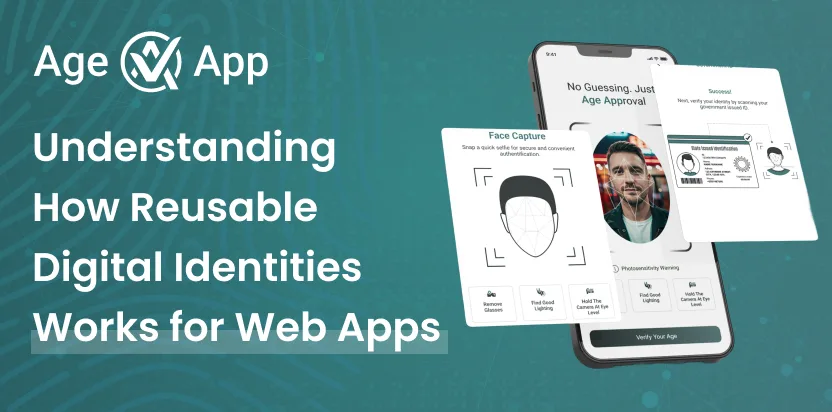
Understanding How Reusable Digital Identities Work for Web Apps

Managing individual logins and repeatedly verifying identity across dozens of web applications can make onboarding slow and frustrating.Platforms must balance proper user verification with maintaining a smooth access experience.

Traditional identity systems typically require each platform to collect and store copies of government IDs, selfies, or other sensitive data. Every additional copy expands the potential attack surface and increases compliance and data protection responsibilities.

Age App’s reusable digital identity model aims to reduce repeated document uploads while still requiring real-time, session-based verification whenever access is requested. For web applications, this approach supports strong verification standards without unnecessarily increasing friction or duplicating sensitive identity data across systems.

What Does a Reusable Digital Identity Mean?

A reusable digital identity refers to a verification model that allows individuals to access multiple services without repeating a full identity check each time.

Age App’s model is a cryptographically protected verification result that enables platforms to confirm required attributes without repeatedly collecting identity documents, while still enforcing live, session-based verification when access is requested.

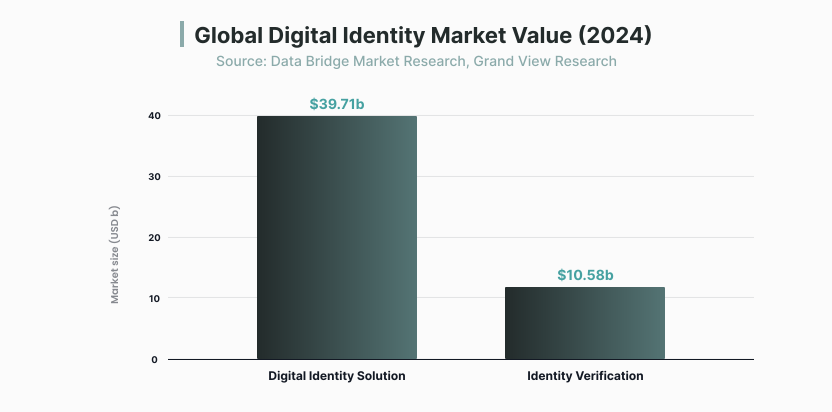
In 2024, the global digital identity solution market reached about 39.71 billion USD, highlighting the growing demand for secure and efficient verification methods. As demand for secure and efficient verification grows globally, reusable models are gaining attention as a way to balance user experience with stronger data protection practices.

Global Digital Identity market value

Under this approach, an individual completes an initial identity verification step, such as validating a government ID with biometric matching, which establishes a secure eligibility baseline. When a web application later needs to confirm an attribute like “Is this user over 18?”, the user completes a live verification session instead of re-uploading identity documents.

Problems With Traditional Identity Verification

Traditional identity verification tools typically require users to upload documents and selfies separately for each platform, increasing onboarding friction and repetition.

As digital services expand globally, individuals are often required to verify their identity across multiple applications. Each verification can result in new copies of sensitive documents being stored in separate systems, expanding the potential exposure if a platform experiences a breach.

Simultaneously synthetic identities and deepfake-enabled impersonations make it increasingly difficult to rely solely on static document images distributed across databases.

For web applications, manual document reviews and fragmented verification workflows are difficult to scale under growing regulatory pressure, resulting in slow onboarding, increased operational costs, and inconsistent user experiences.

How Age App Works

Reusable Digital Identity vs. Traditional Identity Verification

Age App’s Reusable identity allows a web application to confirm required attributes without collecting or storing full identity artifacts.

Aspect Traditional Verification Reusable Digital Identity
Verification pattern Users repeat full ID checks on each platform Users complete an initial setup, and perform live, session-based verification for each access request.
Data shared Raw ID documents, selfies, personal details Time-limited, cryptographically signed pass/fail age-eligibility results
Data Storage Each platform stores identity documents and related data Platforms receive time-limited verification results per session without receiving ID images or biometric artifacts.
User effort High friction, repeated uploads across services Low friction after initial setup
Privacy posture Broad data collection, larger breach exposure Data minimization with session-based result delivery

The platform validates a cryptographically signed verification result generated during a live session, rather than relying on stored document copies.

How Reusable Identities Work with Age App in Web Applications

Initial Checking Using Authoritative Data

A user completes a structured identity or age verification process that includes validating a government-issued document and performing a live biometric match.

This process involves advanced identity verification tools with KYC methods, including document authenticity checks, security feature validation, and facial matching to confirm that the person presenting the document is the rightful holder

Generation of Cryptographically Signed Verification Result

Once verified, Age App generates a time-limited, cryptographically signed age-eligibility result for the current session.

This result allows platforms to confirm that a user meets the required age threshold without receiving ID images, biometric data, or identity details.

Fast Age Verification Across Web Apps Without Re-Uploading IDs

When the user visits a web application that requires age confirmation, the platform requests verification of a – “Is the user 18+?

Age App conducts a live verification session and generates a signed age-eligibility result for that session. The web application validates the result in real time through secure verification flows, without receiving identity documents, images, biometric artifacts or unnecessary personal data.

Explore Related Topic

Ultimate Guide to How Online Age Verification Works

Role of Verifiable Results in Reusable Identity

Verification results are digitally signed statements about a specific attribute, such as whether a user meets an age threshold, that can be cryptographically validated by a web application during a verification session. These results are generated only after the system verifies the user, without exposing full identity details to the platform.

These verification results allow privacy-first validation. A platform can confirm a statement such as “over 18” without receiving the user’s birth date, document images, or other sensitive personal identity information.

This enables web applications to make strong access decisions while limiting the amount of personal data collected and stored.

Because verification results follow standardized validation methods, they can be consistently verified across different platforms and web applications, helping with interoperability .

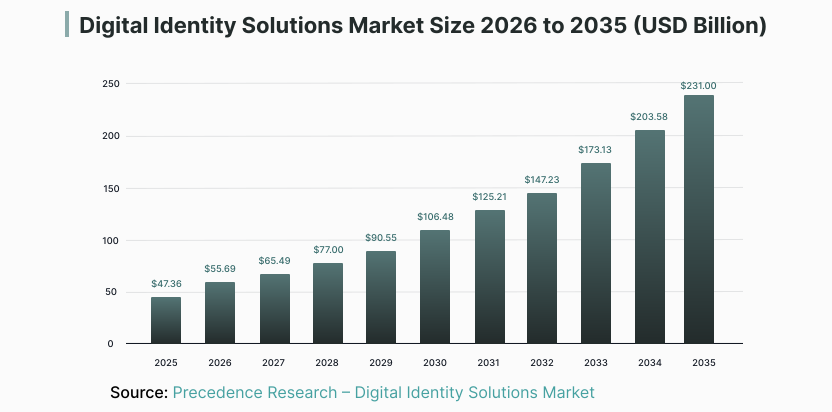
The digital identity solutions market is valued at approximately USD 47.36 billion in 2025 and is projected to grow to USD 203.58 billion by 2035 at a 17.59% CAGR, reflecting rapid adoption of reusable digital identity and privacy-first verification models globally. As digital services continue to expand, privacy-first verification models are gaining attention as a way to strengthen compliance while reducing unnecessary identity data exposure.

Digital identity solutions market size 2026 to 2035

Age App: User Control, Privacy, and Data Minimization

With Age App, users complete verification when age confirmation is required, and age eligibility is enforced through live, session-based checks each time access is requested.

Web applications receive only a signed age-eligibility result, such as pass or fail, rather than raw identity artifacts or document images.

This approach aligns with privacy-by-design principles and evolving policies focusing on purpose limitation, data minimization, and user agency.

By reducing the need for platforms to store replicated copies of identity documents and biometric images, Age App’s reusable verification model helps limit unnecessary data exposure and reduce the overall identity storage footprint across systems.

“Privacy by design calls for privacy to be taken into account throughout the whole engineering process.” — Ann Cavoukian

Benefits of Reusable Digital Identity

Reusable digital identity strengthens privacy, security, and compliance across every verification flow. Here’s how it delivers measurable advantages for both users and web applications.

For Users

  • Quickly access web applications through a streamlined workflow after completing initial eligibility setup.
  • Reduce the need to repeatedly upload identity documents across platforms.
  • Limit exposure of personal information, since platforms receive only required verification results.

For Web Applications

  • Streamline onboarding flows with reduced document repetition and user abandonment.
  • Reduce fraud through cryptographically signed, session-based verification results.
  • Limit compliance and regulation risks by receiving only a session-based yes/no age-eligibility result and not sharing or storing government ID images or biometric artifacts.

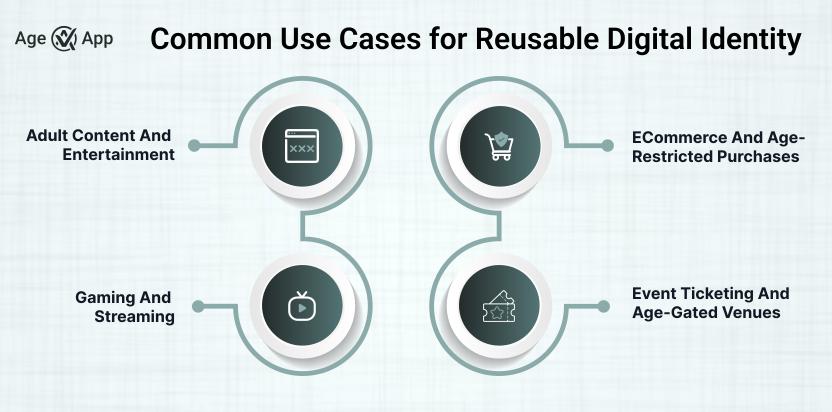
Common Use Cases for Reusable Digital Identity

Reusable digital identity enables fast, privacy-first age verification without repeated ID uploads. Here are common use cases where you can use it to simplify age-gated access across industries.

Common Use Cases for Reusable Digital Identity

    • Adult Content and Entertainment: Platforms that restrict access based on age can enforce privacy-preserving age verification without requiring repeated ID uploads.
    • Gaming and Streaming: Online gaming and streaming platforms can confirm age eligibility for regulated features while maintaining streamlined access across devices.
    • eCommerce and Age-restricted Purchases: Online and in-person retailers selling alcohol, tobacco or cannabis, or other regulated products can utilize session-based age verification at entry or checkout without relying on manual entry handling, collecting or storing government ID images.
    • Event Ticketing and Age-Gated Venues: Digital ticketing platforms can confirm age thresholds before granting access to age-restricted events or services.

Technical Considerations for Implementing Age App’s Reusable Identity

  • Interoperability: Reusable identity is most effective when built on standardized API-based verification flows that allow platforms to validate signed verification results in real time. Consistent validation methods ensure that verification results can be validated consistently across different web applications.
  • Cryptographic Security: Verification results should be digitally signed using strong cryptographic methods. Platforms must be able to validate these signatures securely to confirm authenticity and prevent tampering.
  • Regulatory and Privacy Safeguards: Implementation should align with applicable privacy regulations such as GDPR, national and state-level identity or age-verification laws. This includes clear consent mechanisms, defined data use purposes, and limited data retention practices.
  • Scalability: Verification systems must be able to handle high request volumes with low latency, especially for consumer-facing platforms operating across regions and time zones.

Age-based solutions can be integrated through SDKs or APIs, allowing platforms to trigger verification flows and validate session-based age results without directly handling identity documents or biometric artifacts.

[age_app_blog_cta button_target=”1″ heading=”Upgrade Age Gates with Reusable Age Tokens” description=”Replace repeated document uploads with real-time, signed age verification designed for scalable web applications.” button_text=”Modernize Age Verification” button_url=”https://share.hsforms.com/1bw6ZG-WkSXqaMcuFbqtK5Qrm1t3?__hstc=147087592.36e82aaa0681b484b6627f65e0557864.1762752496672.1771562628799.1771566118355.108&__hssc=147087592.1.1771566118355&__hsfp=0b6568d1af20804aafd3ae54898ca0cb”]

Challenges and Considerations for Adoption

  • Regulatory variation: Age restrictions and identity regulations vary across jurisdictions.Reusable verification models must account for differing assurance requirements, privacy rules, and data management standards in each region.
  • User understanding: Session-based digital age verification may be unfamiliar to some users. Clear, intuitive, user experience design and transparent communication are essential for user understanding.
  • Balancing security with experience: Strong verification methods, including biometric matching and real-time validation, must be implemented in ways that maintain usability and avoid unnecessary friction.As standards evolve and regulatory frameworks mature, reusable verification approaches are likely to continue developing alongside broader digital identity infrastructure.

Conclusion

As more web applications explore proof-based verification approaches, reusable identity models are increasingly viewed as a way to balance compliance requirements, user experience, and data minimization.

Age App’s reusable digital identity model reduces repeated document uploads while maintaining live, session-based verification when access is requested.

In the context of age-restricted web applications, Age App enforces age thresholds through structured eligibility setup and real-time, cryptographically signed verification results. Platforms receive only the age confirmation required for access, not full identity artifacts or document copies. This, in turn, supports user privacy and reduces regulatory risk for the platform.

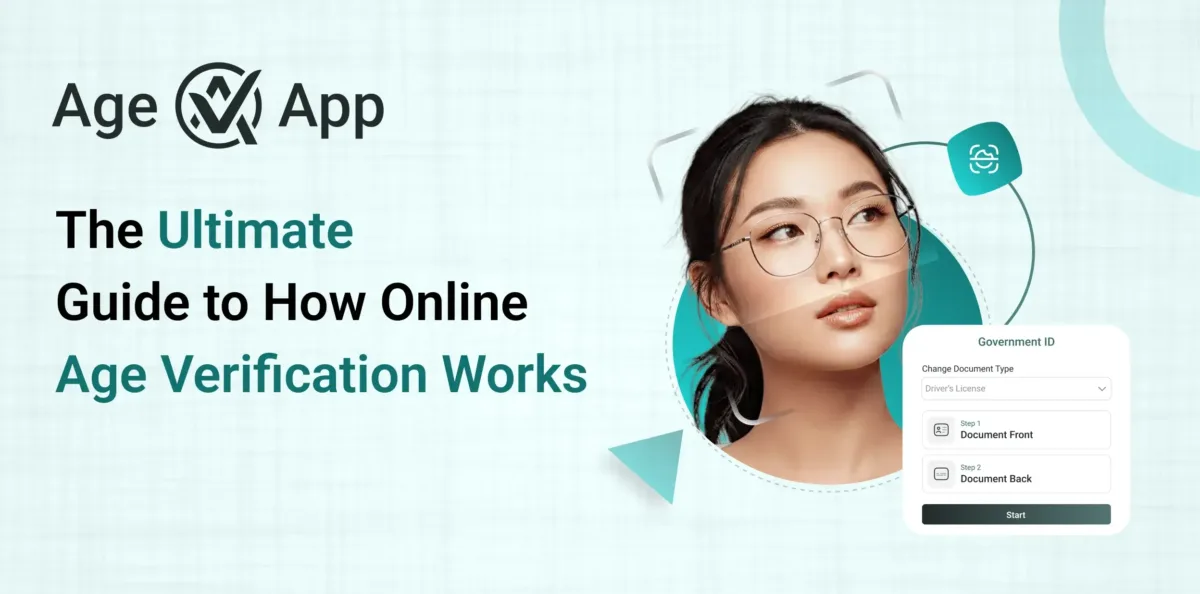
Ultimate Guide to How Online Age Verification Works

If your business sells restricted products or services which require online age verification for every customer, having a robust verification process is essential.

Traditional methods, such as asking users to input their age or check a box to confirm compliance, are no longer effective. Curious users can easily bypass these measures, leading to unrestricted access and undermining the very purpose of age restrictions on certain products and services.

Today, age verification has become more important as regulatory and safety expectations are at an all-time high and continue to rise.

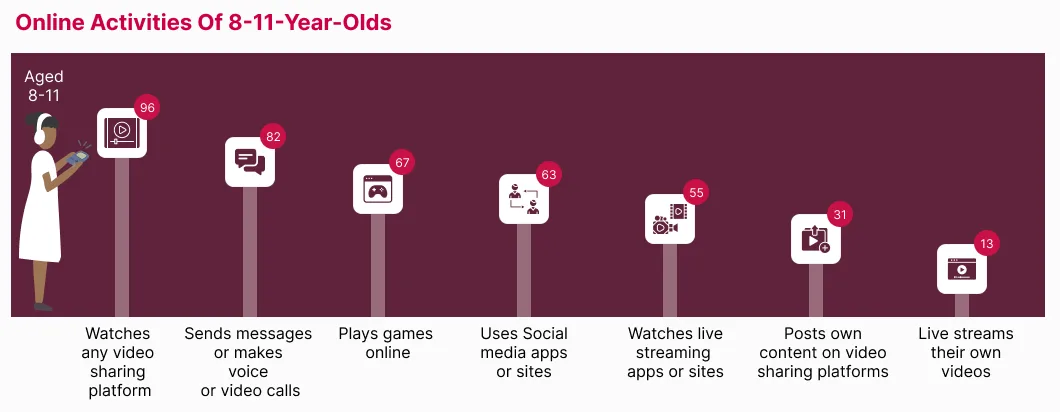
Although most countries set a minimum age of 13 for social media, nearly 50% of children aged 8–11 access these platforms by entering false birthdates, exposing themselves to online interactions, messaging, gaming, and live streams intended for older users.

Online activities of 8-11-year-olds

To address these issues, online age verification platforms provide a more effective and compliant solution in the market. The sections below explain how age verification works and why it has become necessary for organizations.

What Is Online Age Verification and How Does It Actually Work?

Online age verification is the process of accepting government-issued IDs, extracting a user’s birth date, and confirming age through automated checks.

Because this process involves access to sensitive data, many businesses rely on age verification API services providers such as Age App to handle verification securely.

Age verification APIs confirm whether users meet age requirements without exposing users identity.

Verification plays a key role in securing user data while fulfilling compliance and age-related requirements. times, people are confused between What is age verification, age gating, and age estimation, so lets understand them briefly with an explanation.

Difference between:

  • Age verification

The process of confirming a user’s age through official documents, such as government issued IDs, producing a definitive result.

  • Age gating

A method used to restrict access to websites or services for users below a specified age, usually through a checkbox or modal. It relies on self-reported information and offers limited protection.

  • Age estimation

A technique that is used to estimate a person’s age when their exact birth date is not available and is typically used as a supplementary signal rather than a definitive check.

Why accuracy and privacy must coexist

Age verification systems must be accurate enough to prevent underage access without compromising user privacy. Effective solutions request only the data required for age computation and avoid collecting unnecessary personal information.

Why Online Age Verification Is Essential for Every Business Today

Online age verification is essential for regulated digital businesses, helping platforms comply, protect users, and prevent fraud without adding friction.

Legal and Regulatory Requirements

When a platform provides age-restricted products, or services, it is a regulatory requirement to have online age verification.

Failing to implement proper age verification can result in regulatory action, fines, and operational risk which can cause significant damage to your business and finances.

Protection of Minors

Online Age verification helps protect minors by restricting access to age-inappropriate products and content.

This reduces early exposure and the risk of addiction to unsuitable material available on the internet.

Beyond protection, age verification also promotes responsible access control early on, reinforcing safe digital habits from the start

“The internet was not designed with children in mind.” — Tim Berners-Lee

Fraud and Identity Misuse Prevention

Without age verification, it becomes easier for users to create fake accounts and share identities across multiple people to access the same platform.

This opens the door to fraud, and identity misuse, creating serious challenges for online platforms. By implementing a robust age verification API, you can minimize platform misuse and enforce restrictions effectively.

Brand Reputation and Reliability

Compliance sets your business apart, making it more credible than non-compliant competitors. By adhering to age verification regulations, you protect your brand from financial penalties and reputational damage, while reinforcing your commitment to ethical and responsible practices.

Online Age Verification Methods Explained for Businesses

Age verification for age-restricted services must be reliable to meet regulatory and safety standards while balancing compliance, security, and user experience. Here are the most common methods:

ID-Based Age Verification

One of the most widely used methods, supported by most age verification providers. In this approach, a user’s age is confirmed through government-issued ID cards.

Birth dates are matched against official government issued IDs and verified through shared government databases to prevent fraud.

While this method is highly accurate, it is not foolproof; errors in data extraction can lead to incorrect verification and even block legitimate users, which is a major limitation.

Biometric-Assisted Verification for Identity Confirmation

Many modern age verification platforms offer biometric matching to confirm whether an ID belongs to the user. To enhance security, Biometric liveness detection is added to ensure the user is physically present, and the biometric is not stolen or an outdated biometric sample.

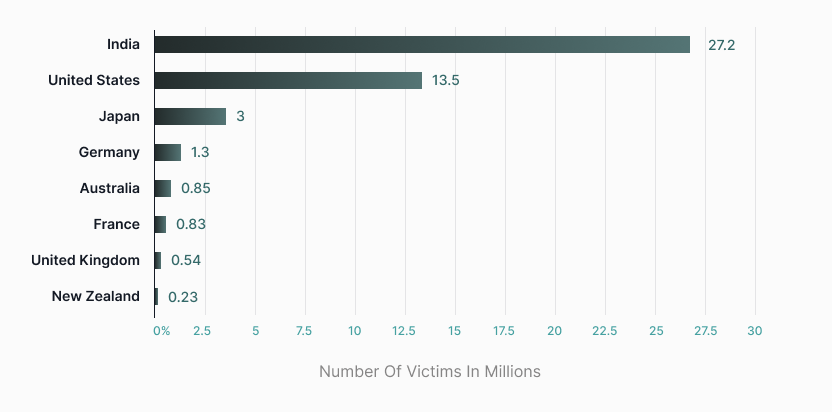
This approach solves the biggest and growing issue of stolen and shared identity documents which affected more than 13.5 million consumers in 2025 just in the U.S. alone.

Number Of Victims in Millions

The biometrics used in this process are used solely for identity confirmation of the user, not for age estimation.

Token-Based Age Confirmation (Privacy-First Model)

If looking for a highly secure and privacy-first approach to age verification, you should look at token-based age confirmation.

This method converts a user’s age to a cryptographically signed token, and verification platforms only share a yes or no result.

By implementing this method, there’s no need to store ID’s or other personal data. Users can re-use their user-controlled age tokens across platforms, making this method both secure and privacy focused.

How Age App Verifies Users Securely and Accurately

Age App uses an automated system to verify user age precision and security, preventing misuse, identity fraud, and unauthorized access. Here’s how the process works:

What happens when a user initiates an age verification check

Age App supports verification wherever there is a requirement for age verification, whether through the app directly or by scanning a QR code to start the process.

How age verification systems confirm eligibility in real time

Users verify their age on by matching a government-issued ID with a live biometric scan.

This process confirms eligibility instantly without sharing personal identity details with the platform, ensuring privacy while granting or restricting access in real time.

Block underage access with real verification

How fraudulent and spoofing attempts are identified and blocked

Fraud prevention is achieved through real-time ID age verification against shared government databases. Additional measures like rate limiting are applied to prevent repeated requests from the same IP address.

Why automated age verification is faster and more reliable than manual checks

Manual checks have always been inefficient, error-prone, and risky. Mistakes can expose minors to inappropriate content and lead to regulatory violations.

Hence, automated age verification is a faster, more reliable, and scalable way to perform age verification for modern businesses.

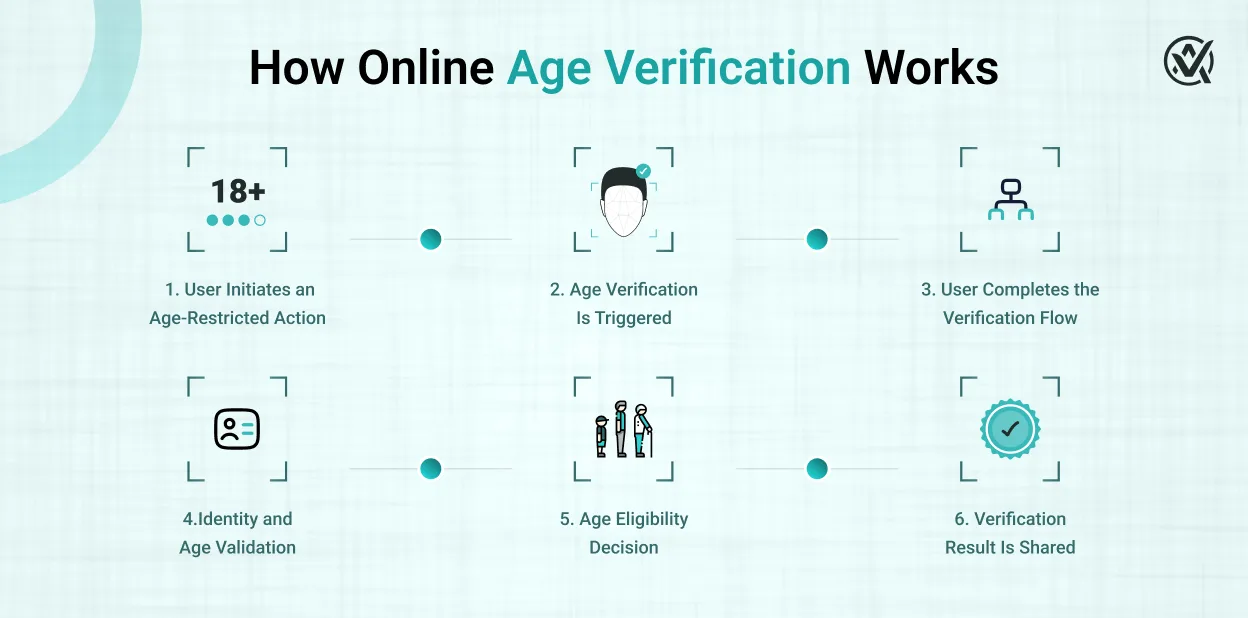
Step-by-Step Guide: How Online Age Verification Works

This guide provides details on how online age verification operates, covering user initiation, eligibility checks, and decision- making, without compromising on accuracy, security and compliance.

Step-by-Step Guide How Online Age Verification Works

Step 1: User Initiates an Age-Restricted Action

The process is initiated by the user when attempting to access regulated content, sign up for a restricted service, or make a purchase for restricted items.

Step 2: Age Verification Is Triggered

Once the age-restricted action occurs, the platform triggers Age App by showing a QR code or a “Verify with Age App” button, which starts a secure, real-time verification session on the user’s device.

Step 3: User Completes the Verification Flow

Age App guides the user through a quick verification flow. The user takes a selfie, and it confirms liveness, making sure the person is physically present and real.

Step 4: Identity and Age Validation

After the user completes the verification flow, automated ID validation and fraud detection takes place.

Age App matches the live selfie to the user’s previously verified government ID (done once) to confirm the user’s age. This biometric ID match happens privately and securely.

Step 5: Age Eligibility Decision

It determines whether the user meets the required age threshold (e.g., 18+ or 21+). The platform receives a simple pass/fail result.

Step 6: Verification Result Is Shared

The platform receives a real-time pass/fail result. It never receives or stores full personal information, only the age-verified response.

By following this model, you ensure there is no need for platform-side storage and privacy of the user is also maintained.

How Online Stores Instantly Verify Customer Age

During onboarding or at the checkout point, online stores use real-time age verification to ensure that only eligible users can access restricted content, products or services, while allowing qualified customers to complete purchases without unnecessary friction.

  • Age verification during checkout or onboarding

Online stores can trigger age verification either during onboarding at the point of checkout, depending on when age eligibility is required.

Verifying age during onboarding is often more effective, as it allows platforms to apply age-based access rules once and avoid repeated checks during future purchases.

  • Preventing underage purchases of restricted products

With real-time age verification results, online stores can restrict and prevent underage users from accessing or purchasing restricted products on their platforms.

This platform helps them meet regulatory requirements and enforce age-based access consistently.

  • Reducing chargebacks, fraud, and compliance risk

When age verification is enforced before restricted purchases, platforms reduce the risk of chargebacks, misuse, and compliance violations related to underage transactions.

  • Ensuring minimal friction for legitimate buyers

When age verification is completed during onboarding, legitimate buyers can access eligible products without being asked to re-verify on every purchase.

The Role and Advantages of an Age Verification API

Age verification APIs provide real-time, scalable, and secure age eligibility checks for businesses that require such services.

These platforms usually have SDKs and APIs that can be integrated into websites, apps and checkout flows easier and automated age verification.

Because verification is automated and cloud-based, age verification APIs can scale efficiently as request volume increases.

Moreover, real-time responses allow platforms to make immediate access decisions without storing identity data.

Platforms like Age App provide APIs that allow systems to request age eligibility decisions without directly handling sensitive personal data.

[age_app_blog_cta button_target=”1″ heading=”Replace age gates with real-time verification.” description=”Check age eligibility instantly through a secure API, without exposing personal identity.” button_text=”Secure Age Verification with Age App” button_url=”https://chainitid.com/demo/”]

Top Challenges Businesses Face in Online Age Verification

Businesses implementing online age verification must accurately identify minors, manage user experience, and adapt to evolving regulatory requirements.

Identifying Minors Accurately

One of the main challenges is to accurately identify minors who may attempt to misrepresent their age or bypass age-verification controls.

Balancing Security and User Experience

Verification processes often add unnecessary friction to user experience, making it difficult for businesses to balance security and service design.

Reducing friction too aggressively can weaken verification controls, while overly strict flows can harm user experience. Effective systems balance both.

Navigating Evolving Regulations

As new privacy rules and age-restrictions are developed, it is challenging to navigate evolving global regulations.

Keeping up with changing age and privacy regulations across regions can be time-consuming and complex for businesses operating at scale.

Best Practices for Implementing Online Age Verification Effectively

By doing the best practices, you will be able to keep your age verification just as secure, compliant and user-friendly.

Using multiple verification layers : Using multiple verification signals improves resilience and accuracy when a single method fails or is unavailable.

Applying risk-based verification flows : Risk-based verification allows platforms to apply stricter checks only when higher risk is detected.

Keeping verification flexible and configurable : Verification systems should be configurable to adapt to different business models, products, and regulatory environments.

Reviewing and improving verification over time : Verification workflows should be monitored and refined over time to remain effective and proportionate.

What Users Experience During Online Age Verification

This section explains what users experience during online age verification; the steps they follow, what actions are required, and how quickly results are delivered.

What Users Are Asked to Do

During online age verification, users are guided through a short workflow that may include scanning a QR code, completing a biometric check, or confirming eligibility.

How the Process Feels

For most users, the process feels fast and straightforward, with clear instructions and real-time results.

Typical Verification Time

Most modern age verification systems provide real-time results, allowing platforms to apply access rules immediately.

Conclusion

Online age verification does more than protect minors from accessing sensitive platforms, it enables businesses to provide access to the right age group, and tailor user experience based on verification results.

It also plays a critical role in meeting global privacy and age-restriction regulations.

Modern solutions like Age app use secure, privacy-first methods such as automation, token-based verification, and API-driven processes to prevent fraud and safeguard users.

If your business operates in an industry with age restrictions, adopting a reliable age verification platform is essential. It ensures compliance, prevents misuse, and delivers a safe experience for your users.

Why Facial Biometric Liveness Are Important for Compliance and Security

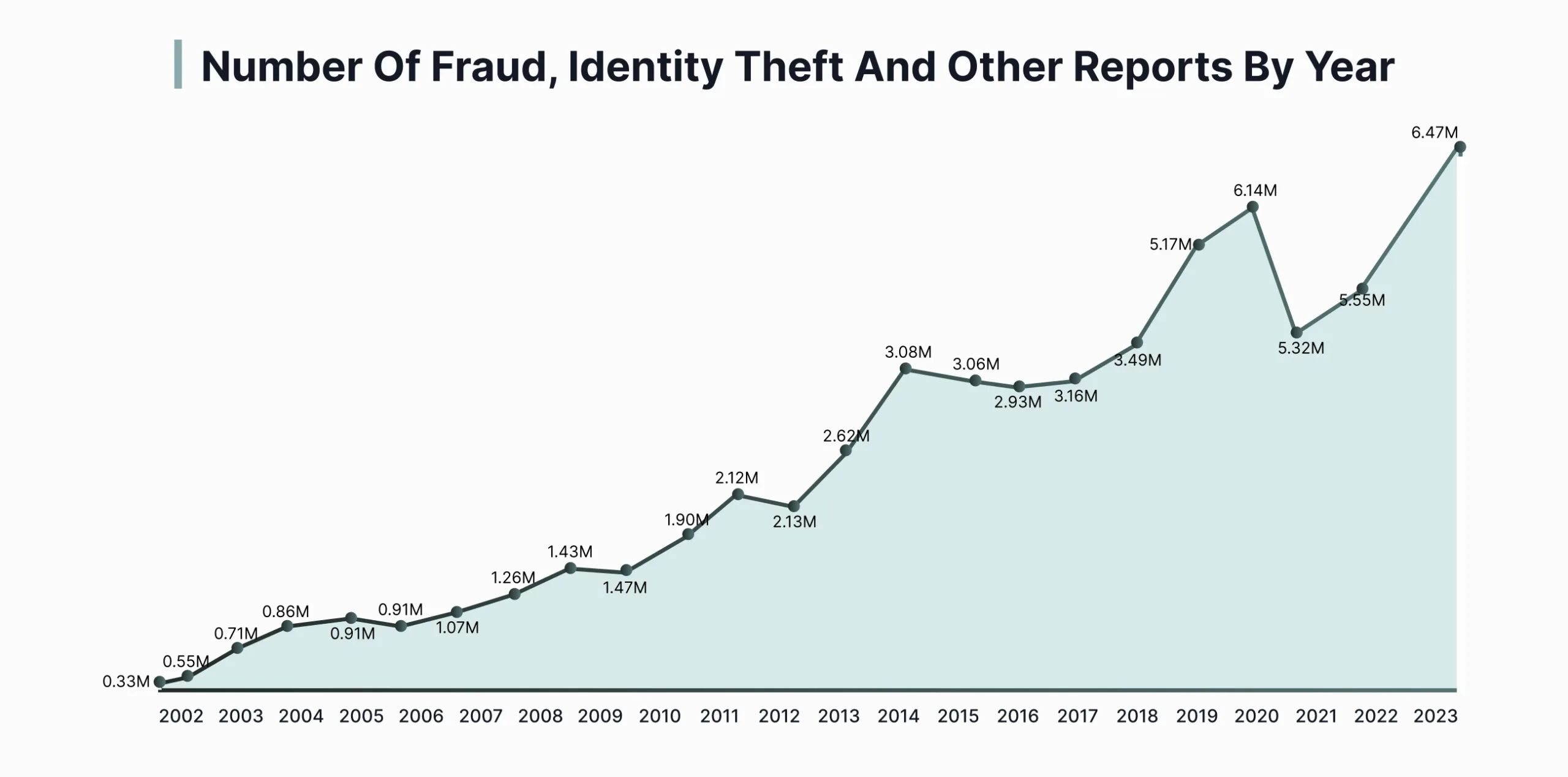
Have you ever wondered how secure your online accounts really are? Or how fraudsters manage to trick digital verification systems? In 2024, the FTC’s Consumer Sentinel Network received 6.47 million reports, related to fraud, identity theft, and other consumer complaints.

Number of Fraud, Identity Theft and Other Reports by Year

Traditional facial recognition systems can be deceived using photos, videos, masks, or even AI-generated deepfakes. So, what can business do to make sure that the person on the other side of the screen is real? Facial Biometric Liveness confirms the presence of a live human being, helping block spoofing and account takeovers while supporting compliance with KYC and AML regulations.

Even sophisticated systems are prone to failure without liveness detection, and businesses are at risk of losses and users compromised safety. Without liveness detection, attackers can sometimes gain access using nothing more than a photo or video. Liveness detection helps ensure that doesn’t happen.

What Is Facial Biometric Liveness Detection?

Facial biometric liveness is used to confirm that the face presented to a system belongs to a live individual, not a spoofed identity. It goes beyond matching facial features by analyzing natural human behavior, depth, texture, and movement.

“A good biometric system should not depend on secrecy, but the validation process must check for liveness of the readings.” — Dorothy E. Denning

Common Types of Liveness Detection.

Passive liveness

  • Examines the micro-movements, skin texture, lighting patterns, and facial depth.
  • No user action required
  • Good with high-speed user interfaces.

Active liveness

  • Asks the user to perform simple actions such as blinking or turning their head.
  • Increases an additional level of verification.
  • Applicable in high-risk situations.

Both methods are designed to prevent attacks which cannot be detected through static image matching alone.

Why Facial Biometric Liveness Is Essential for Security

As digital interactions continue to grow, fraud is increasing alongside them. Leading to why facial biometric liveness is widely adopted, it allows businesses to authenticate real users in real time and prevent fraud from the start.
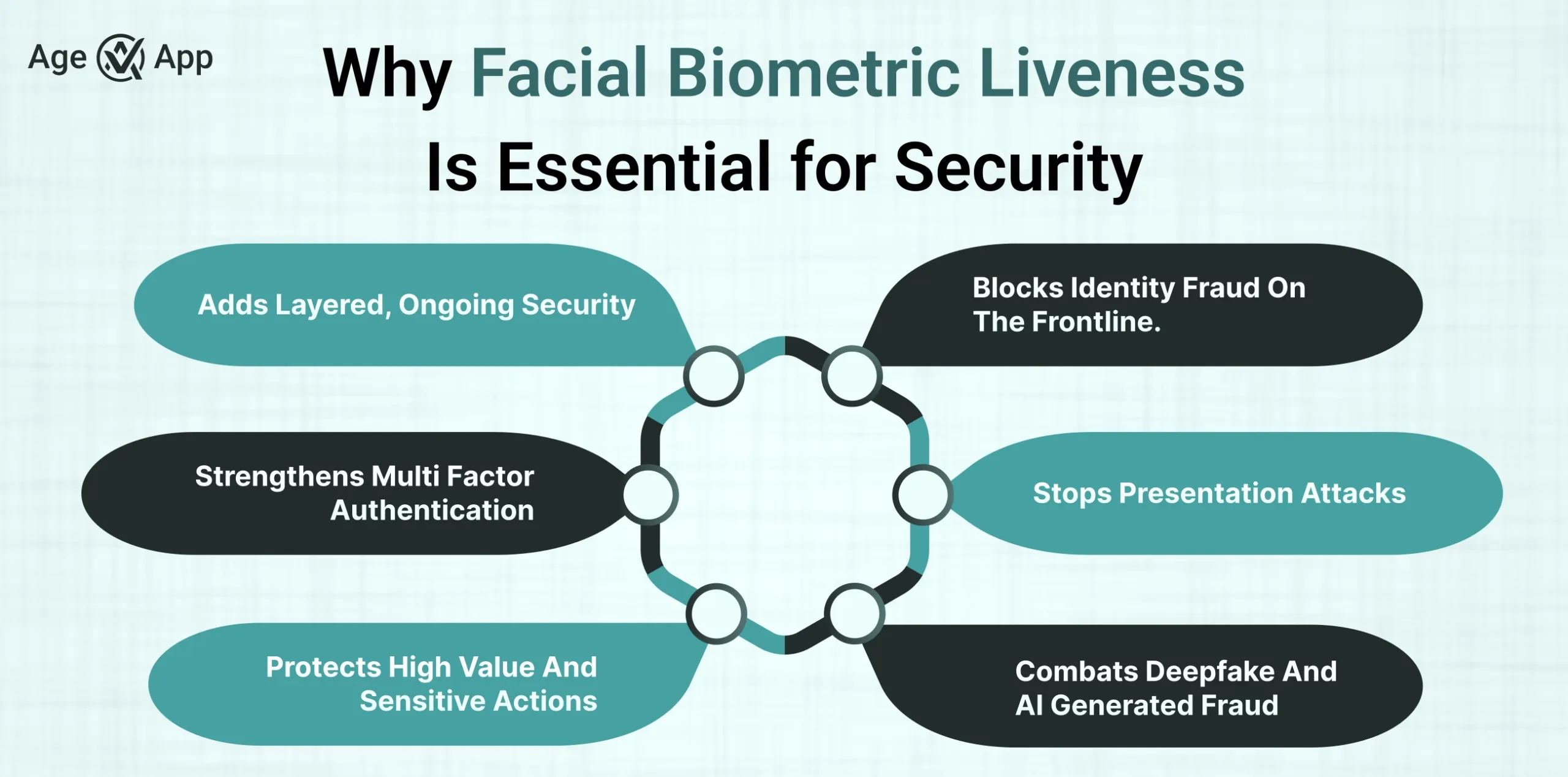
Why facial biometric liveness is essential for security

Blocks Identity Fraud on the Frontline

The majority of fraudulent acts online begin with onboarding or log-in. Facial liveness ensures that a real individual is present, preventing at the earliest stage. This helps prevent:

  • Fraudulent or counterfeit accounts.
  • Utilization of misappropriate identities.
  • Synthetic identity fraud

Preventing fraud at the initial stage keeps platforms safer and builds greater user confidence.

Stops Presentation Attacks

In most cases, fraudsters will attempt to deceive systems with photos, videos, masks, or screenplays. Facial liveness prevents such attempts thus only real; live users are allowed through verification.

Combats Deepfake and AI Generated Fraud

Deepfakes have reached a level of realism that traditional verification methods are no longer effective. Facial liveness examines natural facial movements, and depth AI-generated media cannot reliably replicate. Reduces Account Takeovers

Try Age App Facial Liveness Now

Facial liveness provides a high level of protection even when the login information is stolen. In Age App, liveness is used only during verification or authentication to confirm live user presence, ensuring unauthorized users cannot gain access.

Protects High Value and Sensitive Actions

For platforms executing payments or personal information, facial liveness provides additional safeguards during critical actions such as:

  • Large fun transfers or high value transactions.
  • Profile or identity updates
  • Password resets
  • New device logins

This ensures that businesses and the users remain protected when it matters most.

Strengthens Multi Factor Authentication

Facial liveness adds a biometric layer that cannot be guessed, shared, or duplicated. When combined with passwords or one-time passcodes (OTPs), it significantly strengthens the authentication process, making it more secure and resilient.

Adds Layered, Ongoing Security

Facial liveness isn’t limited to a single verification point. It can be applied at various stages of the user journey, offering ongoing protection without introducing unnecessary friction for legitimate users.

How Facial Biometric Liveness Is Used to Meet Global Compliance Requirements

Digital businesses can no longer afford to overlook regulatory requirements. Facial biometric liveness plays a critical role in ensuring compliance while maintaining a seamless, non-disruptive user experience.

Meets KYC and AML Requirements

Regulators require businesses to verify identities, prevent impersonation during onboarding, and high-risk activities. Facial liveness confirms that the individual undergoing verification is physically present and the identity document provided.

It enables compliance with:

  • KYC Onboarding and identity verification requirements.
  • Fraud prevention and AML risk controls.
  • Customer due diligence and ongoing monitoring obligations.

By strengthening identity checks, businesses reduce regulatory risk and confidently onboard legitimate users.

Aligns With Anti-Spoofing Standards

Facial biometric liveness is designed to fulfill anti-spoken demands by detecting attempts to use photos, videos, masks, or synthetic media.

This ensures identity verification processes align with established security and compliance standards.

Supports Privacy-First Compliance Models

Contemporary facial liveness authentication does not save facial images or other sensitive user information over an extended period. Modern liveness solutions advocate the principles of data minimization and privacy-by-design principles mandated by many global data protection laws.

Companies do not need to enhance data exposure or create a privacy risk to ensure that they meet compliance needs.

Reduces Compliance Failures and Penalties

Facial liveness enables organizations to avoid fraudulent access by preventing access at an early stage:

  • Regulatory breaches and leakages.
  • Unsuccessful audits and investigation reports.
  • Sanctions and penalties.
  • Expensive cleaning and re-checking measures.
  • This is more proactive, which makes it easier to comply, scale and more resistant as the regulations keep on changing.

What Users Actually Experience During Facial Biometric Liveness Checks

During facial biometric liveness checks, users either perform active actions like blinking, smiling, or turning their head, or undergo passive background analysis of skin texture, micro-movements, and subtle facial cues.

This ensures the system detects real humans, not photos, videos, or deepfakes, while balancing secure verifications with user convenience.

What Users Are Asked to Do During Liveness Verification

Users may be asked to blink, smile, or turn their head in active liveness checks
No action is required in passive liveness checks

How the Liveness Check Feels for Users

Active liveness provides stronger verification but may feel slightly intrusive
Passive liveness feels seamless since it runs in the background

Passive liveness checks typically complete in about 2 seconds on average, improving conversion rates around 92 percent in the US when deployed in onboarding flows (data aggregated from industry performance reports).

What Facial Biometric Liveness Detects Behind the Scenes

  • Natural blinking and eye movement
  • Subtle facial muscle shifts and micro expressions
  • Head movement and three-dimensional depth
  • Skin texture differences between real faces and screens
  • Pulse related skin tone changes that indicate a live human

How Facial Liveness Improves Security

  • Blocks photos, videos, masks, and deepfake attempts
  • Confirms real user presence in real time

Overall Impact on User Experience and Reliability

  • Genuine users complete verification quickly
  • Fraud attempts are stopped early
  • Platforms balance security and ease using hybrid approaches

Final Thought

Facial biometric liveness is a critical component of modern identity verification, ensuring that only real, live users can complete sensitive actions, logins, and transactions. By blocking photos, videos, masks, and deepfakes, it prevents identity fraud and account takeovers at the earliest stage. When combined with KYC, AML, and privacy-first practices, liveness detection not only strengthens compliance but also maintains a seamless user experience. Ultimately, integrating facial biometric liveness allows businesses to protect their platforms, secure high-value interactions, and build confidence with users in a world where digital fraud is increasingly sophisticated.

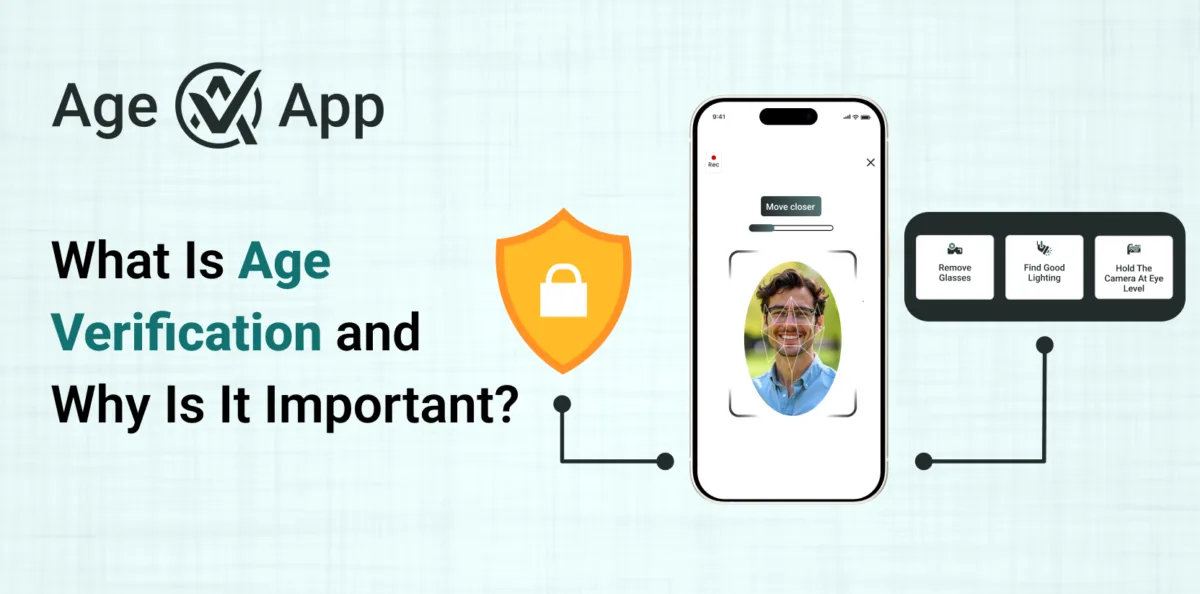
What Is Age Verification and Why Is It Important?

You open a new online platform late at night.
It looks fun, engaging, and full of features. But before you start, a message pops up:

Are you 18 or above?

You click yes.

No ID. No verification. No confirmation.

Just a simple button.

Now imagine a 14-year-old doing the same thing.

This is exactly where age verification becomes crucial for protecting minors and maintaining platform safety.

“Good security, when done right, is almost invisible to the user.” — Bruce Schneier

Today, almost every activity happens online. Gaming, shopping, social platforms, and even educational apps. With this shift, one big question becomes urgent:

How can platforms ensure the right content reaches the right audience safely and legally?
This is where Age App’s secure age verification solutions play a vital role. They ensure that only eligible users access age-restricted content, protect minors from inappropriate material, and help businesses stay compliant with regulations.

What Is Age Verification?

Age verification is the process of confirming a user’s age before giving them access to age-restricted content, products, or services. It prevents underage users from accessing content meant for adults while ensuring a secure and compliant user experience.

It can be as simple as entering a birth date or as advanced as using ID checks, biometric verification, or real-time verification systems.

Think of it as a digital gatekeeper that protects both users and businesses.

Why Is Age Verification Needed?

Every day, millions of people access online platforms. While most users follow the rules, minors can easily bypass simple age prompts if there’s no proper verification in place. This can lead to exposure to inappropriate content or restricted services.

Without proper age verification, minors can accidentally access:

  • Social media platforms with mature content
  • Online streaming services featuring adult-rated movies or shows
  • E-commerce sites selling restricted items like tobacco, alcohol, or vaping products
  • Online communities or forums with explicit discussions
  • Mobile apps or games designed for older audiences
  • Platforms offering age-restricted educational or health-related content

These situations create legal risks for businesses, safety concerns for young users, and reputational challenges for platforms.

Implementing a reliable age verification system, such as Age App, ensures that only eligible users gain access. It protects minors from harmful content, helps platforms comply with regulations, and maintains a safe and reliable online environment for all users.

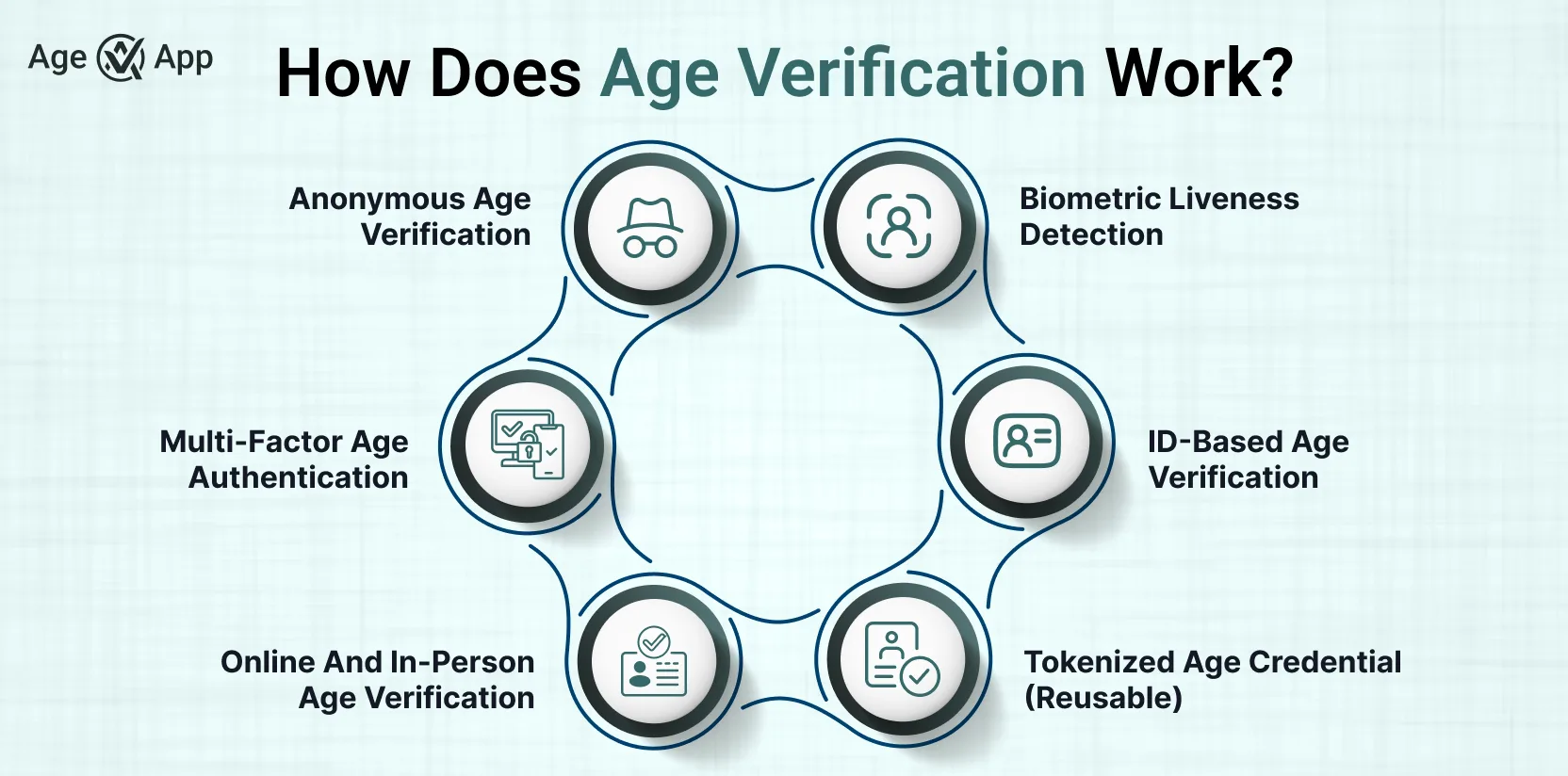
How Does Age Verification Work?

There are different ways platforms verify age, depending on the level of security they require. Age App provides multiple solutions to ensure secure, fast, and reliable age verification for online and in-person platforms. Here’s how each service works:

1. Biometric Liveness Detection

Confirms the user is a real, live person and matches the verified ID holder. Biometric liveness prevents spoofing, deepfakes, and impersonation but does not determine age on its own.

2. ID-Based Age Verification

Users can verify their age by submitting a government-issued ID. The ID is validated for authenticity and age eligibility, and the age result is extracted without storing ID images or personal data.

3. Tokenized Age Credential (Reusable)

After verification, the user receives a tokenized age credential that confirms eligibility (Yes/No). This token can be reused across platforms without sharing identity details or storing personal data.

4. Online and In-Person Age Verification

Provides flexible verification options, whether the user accesses the platform online or physically in person, making it adaptable for all types of businesses.

5. Multi-Factor Age Authentication

Combines multiple verification methods, such as ID checks and biometric scans, for stronger security and more accurate results.

6. Anonymous Age Verification

Platforms receive only an age eligibility result (Yes/No). No name, ID number, or personal details are shared, ensuring privacy through selective disclosure rather than anonymous guessing. This ensures privacy while maintaining full compliance with regulations.
How Does Age Verification Work

Why Age Verification Is Important and How Age App Stands Out?

Platforms rely on age verification solutions to ensure safety, compliance, and a smooth user experience. Here’s why it matters and what makes our solution unique:

1. Protecting Minors

Prevents children and teenagers from accessing harmful or inappropriate content. Our verification methods go beyond basic checks to create a safer online environment.

2. Building User Assurance

Users benefit from platforms that verify age accurately, apply consistent standards, and meet regulatory requirements without collecting unnecessary personal data.. Our biometric verification and privacy-first approach help create long-term assurance and stronger user engagement.

3. Preventing Fraud

Fake accounts and underage misuse can harm both users and businesses. We reduce these risks with reliable, multi-factor verification methods that ensure only eligible users gain access.

4. Ensuring Legal Compliance

Many countries, including the United States, require age verification for restricted content. We help platforms stay fully compliant by verifying age once and issuing a tokenized result, without storing ID images or personal identity data, avoiding penalties and operational challenges.

5. Enhancing User Experience

Verified users gain faster access without repeated checks. Using secure reusable tokens, users can verify their age once and use the same verification across multiple platforms without storing any personal information. This makes the process faster, safer, and fully privacy-focused.

6. Privacy-Focused and Flexible Solutions

Users can confirm their age anonymously, protecting personal information while staying fully compliant. Our solutions adapt to online, in-person, or multi-factor verification needs, offering flexibility that many competitors do not.

Final Thoughts

Age verification may seem simple, a pop-up or quick scan, but it plays a vital role in keeping online platforms safe, secure, and compliant. By using Age App, we can verify users accurately and privately, protect minors, reduce fraud exposure, and meet regulatory requirements without storing sensitive personal data, building credibility while providing a smooth and convenient experience.

With reusable token-based verification and flexible solutions for online and in-person platforms, Age App ensures privacy, efficiency, and full compliance, all without storing sensitive personal data. A quick verification at the start safeguards your platform, enhances user confidence, and keeps your business protected.

Posted in Uncategorized